News:
Most titles can now be found on all digital download and streaming platforms of your choice.
June 2025

orchestramaxfieldparrish
The Curtain Of Dream
Music For Isamu Noguchi
fs 99
This is an aural statement, a series of audio sculptures to celebrate the physical sculptures done throughout one man's life from his earliest works to his death. Being a long time supporter and visitor, I could not help but be inspired by such a place of powerful beauty, this sacred sculpture studio of a man that was so misunderstood, but inspired so many including myself, to explore further, to break down barriers, all doing so within grace and peace and silent harmony with like minded others. Hopefully I have channeled his energy and spirit as he carved stone into eternal art with my interpretation with music.
Sitting and contemplating the sublime works of this man has produced this double digital album today. In a future world, we will return to a musical industry where artists are respected enough to have their works distributed in hard format and not just digital, to those that wish to hear music that way, by those that respect artists, by those that wish to make change. We are not living in that world, hence this recording will be download and stream only on digital platforms that despise the arts and its creators and only view us as profit machines to enable their global destruction.
My hope with this music is to expand other's minds, to explore further and to reflect on the beauty that is all around us and the power to believe in and pursue the future for all, with peaceful change.
- peace,
m • ƒ
_+_+_+_+_+_+_
Isamu Noguchi was a sculptor, but he was so much more than that. “Choreographers and fashion designers and art directors and a whole lot of different people across a really wide creative swath look to Noguchi as a point of inspiration,” says Senior Curator at the Noguchi Museum, Dakin Hart.
Noguchi created this museum in Queens to house a lifetime of his abstract, evocative experiments in stone and metal. Hart says Noguchi was challenging himself with every sculpture. In his later work, Noguchi’s sculptures seem to twist and balance on themselves, undulating with form and texture.
Back in the 1930s, before Noguchi had a signature museum and namesake coffee table, he was a struggling young artist in New York City. He paid the bills by sculpting busts of wealthy people. Noguchi called it “head busting,” and did this type of work to make a little money and also build up his social contacts. Noguchi was as great a networker as he was a sculptor, but head busting wasn’t exactly fulfilling. He wanted to think bigger.
He started to think of a concept for a giant public sculpture, and in his mind, it took the form of a massive pyramid. Try to Imagine a cross between a Mayan temple and a mountain. It pushes out of the earth with a long slide sloping down with steps on two of its faces. Essentially, it’s like an asymmetrical Egyptian step-pyramid. Noguchi thought of it as a playground, and he called it Play Mountain.
This giant ziggurat wouldn’t come with any specific instructions. It would have no rules and no single obvious way to play with it. Noguchi wanted Play Mountain to be a strange new landscape that would dare children to imagine other realities so that perhaps they could grow up into creative, open-minded adults. In fact, the concept for Play Mountain started for Noguchi when he was a little boy.
Isamu Noguchi was born in Los Angeles in 1904. His father Yone Noguchi was a famous Japanese poet and his mother was an American writer named Leonie Gilmour. Before Isamu was born, his father went back to Japan. Noguchi and his mother eventually followed, but by that point, Noguchi’s father had already started a new family. Leonie and Isamu Noguchi ended up moving to a countryside town called Chigasaki. Noguchi’s bright blue eyes marked him as an outsider to the other kids at school, so his childhood was pretty lonely. But from their little house, Noguchi had a great view of Mt. Fuji just like a perfect little pyramid. “…Imagine taking Mt. Fuji and turning it into a giant play structure, I think that’s what Play Mountain was,” describes Hart.
Noguchi even wrote: “Play Mountain was my response based upon memory of my own unhappy childhood — the desolate playground on a cliff in Tokyo which I approached with dread. It may be that this is how I tried to join the city, New York. To belong.” Noguchi wanted to move the mountain from his lonely childhood and reincarnate it as a place for gathering and playing as a gift to the children of New York City.
In 1934, Noguchi got a meeting with Robert Moses, who was the newly appointed Commissioner of the New York City Parks Department. Moses had said his number one priority was to build more playgrounds in the city, which at the time had very few.
The playgrounds Moses envisioned were simple — asphalt or dirt surrounded by a chain link fence, with the Four S’s of playground equipment: swings, slide, sandbox, seesaw – all made out of steel. Moses was planning to just plonk these generic playgrounds in vacant lots all over the city by the hundreds. Noguchi’s massive, ambiguous, otherworldly urban mountain, would have required the movement of huge amounts of earth and concrete and probably would have cost a ton of money, so Noguchi’s play mountain was rejected.
The concept of Play Mountain remained very close to Noguchi’s heart. As Noguchi himself wrote, “Play mountain was the Kernel out of which have grown all my ideas relating sculpture to the earth.” It represented this idea that Noguchi had — that children didn’t need instructions to play. With swings or a slide, there’s only one way to use them and kids just do the same prescribed activities over and over again. If you give children an abstract, surreal landscape, they will be able to interpret it however they want. This philosophy would later be called “non-directive play.” Noguchi never gave up on his design theory of non-directive play, but by then the year is 1941, and things are about to change.
–≠–≠–≠–≠–
Noguchi was in California visiting a friend when he first heard the radio announcement that Japan had attacked Pearl Harbor. With the U.S. entering WWII, contoured playgrounds were forgotten by both the Parks Department and Noguchi because there were bigger stakes now.
Two months after the attack on Pearl Harbor, President Roosevelt signed Executive Order 9066 which gave the American military the right to declare martial law in any part of the country that it deemed necessary to protect the homeland. This meant that Japanese and Japanese Americans in the western part of the United States would be rounded up and removed from their homes.
Noguchi wanted to assist in the situation, so he went to Washington D.C. to find a man named John Collier to help. Collier was the head of the Bureau of Indian Affairs. Because the government needed to build concentration camps in large, open areas of federally controlled land, they decided to build two of them on Native American reservations. This meant that the actual undertaking of building and administering these camps would fall to John Collier’s department.
John Collier was a relatively progressive person. He wanted to give tribal governments more autonomy, protect tribal land, help build economic stability, and support Native American culture. And then suddenly he had been given the task of designing and building prison camps on reservation land. Noguchi reached out to him to talk about what they could do with this assignment since there was no way to prevent internment from happening.
Their idea was to try to turn this into a kind of utopian project. If this was going to happen, they were going to try to make it as good as it could be. Noguchi drew up a suite of plans for the largest of the camps being built in Poston, AZ. Noguchi took the rigid grid of a military-style camp, with rows and rows of tarpaper barracks, and cut an avenue right down the middle of it, lined with public services: schools, gardens, hospitals, restaurants, a department store, a movie theater, a church, and of course, playgrounds.
Noguchi and Collier decided that Noguchi should actually go to this concentration camp in Poston Arizona, voluntarily, and live there while he carried out his plan. The camp was being constructed in the middle of the desert, in the southwestern part of Arizona, on the Colorado River Indian Reservation.
As soon as the camp opened, it became clear that the people weren’t coming there for an idyllic new lifestyle because they were prisoners. To the camp administrators from the War Relocation Authority, Noguchi looked just like another one of the prisoners. Also, because he had some special privileges, the other prisoners assumed he was a traitor in cahoots with the camp administrators.
“He immediately realized he was sort of the worst of both worlds. Because he was just an internee from the administration’s point of view, and he was a turncoat, like a spy, from the other internees’ point of view,” says Hart. After about two months, Noguchi realized that The War Relocation Authority had no interest in making Poston a nice place to live. Instead, they ran it like a prison camp and disregarded all of John Collier’s and Noguchi’s idealistic plans.
When Noguchi gave up on his vision to improve Poston, he realized he was unable to leave because of his identity as a Japanese American. Noguchi was suddenly a prisoner and had made enemies of internees and administrators alike. It took seven months, and many many letters and phone calls before John Collier was able to get Noguchi out for good.
The whole experience was painful for Noguchi. His goals had been so compassionate going in. But racism and fear and bureaucracy killed those dreams and then imprisoned him. After Poston, the idea of designing public works and playgrounds must have seemed wrong somehow. How could you think about playgrounds when there’s so much cruelty in the world?
Once he was back in New York, Noguchi threw himself into the art world designing furniture and making sculptures. Noguchi stepped back from his utopian ideas about art and sculpture, and this is the period when he designed some of the things he’s most famous for today, including the iconic coffee table.
But after a decade of looking inward, indulging in the art world, Noguchi turned his sights back to playgrounds. He couldn’t shake the thought that playgrounds were the perfect way for a sculptor to make real change in the world. He tried two more times to build playgrounds for New York: once in 1950 at the new UN building, another in the early 60s in Riverside Park. These plans were even more complex and strange and wonderful than the ones before, but both were ultimately killed by the city through very long, very brutal, very public battles.
But in this round of rejections, something was different. Noguchi was now very famous and everyone in the art world had heard about all his rejected playground designs. His ideas had been written up in newspapers, and the models were displayed in museums. Other artists and architects began copying them and it became a movement of playground design called the “abstractionist” strand.
These playgrounds don’t tell you what to do. You can play with an abstract form any way you want, and imagine it as anything you like. But by the end of the 1970s, the abstract playground movement went underground because the entire world of playground design in the United States changed dramatically.
A two-year-old boy named Frank Nelson was climbing a 12-foot-tall slide in a Chicago park when he slipped through a railing and hit his head so hard that it caused permanent brain damage. The park system of Chicago was sued and had to pay out millions of dollars to Nelson’s family.
At that time, in the late 70s, there were no laws or real industry standards when it came to the safety of playground equipment. Frank Nelson’s fall was one of a number of lawsuits that led the Consumer Product Safety Commission to publish the Handbook for Public Playground Safety in 1981. Then another standards organization, the ASTM, published its own guidelines. Pretty soon these rulebooks were in the hands of insurance companies and parks departments and school boards across the United States. To this day, almost all playgrounds have to be approved by a certified playground safety inspector.
And safety inspectors look for places where kids could fall, or get pinched, poked, or trapped. As you might imagine, all of these rules and regulations make the job of playground designers a lot harder. This is the reason why the playgrounds that you see everywhere all look more or less the same. A majority of playgrounds are “post and deck” systems with standard swings, slides, and monkey bars in one piece of equipment.
Scott Roschi is the creative director at Landscape Structures and he says the kind of abstract playgrounds that Noguchi inspired are starting to re-emerge. “Designs of today are echoing a lot of what Noguchi’s concepts were. They’re still relevant today, we’re starting to bring them back in a lot of custom playground design,” says Roschi. And this goes back to Noguchi’s concept of non-directive play, if adults are confused by a piece of play equipment, it often means kids will be all over it.
Although there are no playgrounds in New York City with Noguchi’s name on them, his ideas – about imagination, and freedom to play – have left a deep mark on playground designers, and are shaping the emerging playgrounds all around us.
Noguchi’s model for Play Mountain remained on display in his Long Island City museum until January of 1988. At this point, he was 84 years old when a man from Sapporo, Japan came to visit his Long Island City museum and told Noguchi that he thought he could get one of Noguchi’s parks built in Sapporo.
Noguchi started designing play structures and earthworks for the park with his longtime collaborator, the architect Shoji Sadao. But in the winter of that year, he came down with a cold which turned into a terrible case of pneumonia that ultimately took his life shortly after. Noguchi died on December 30th, 1988, having designed the vast majority of the park. His collaborator, Shoji Sadao, continued to work on it. From Noguchi’s death at the end of 1988, Moerenuma Park took 17 years to build and finally opened in 2005.
“It’s enormous … 454 acres – that’s bigger than Central Park,” says Dakin Hart. “It is kind of an amalgamation, a greatest hits, of all of Noguchi’s un-executed land and playground ideas, in one spot.” It’s this huge green swath of land, tucked into a bend in the river. There are forests of his candy-like play equipment, mounds and pyramids and swooping paths, an enormous conical hill to climb, a huge fountain that cycles through an hour-long water show.
Isamu Noguchi was never able to take in the view from the peak of his creation, the sculpture he’d spent his whole life dreaming about, like a mountain teleported from the wild alien planet of his mind, the one place he ever felt he really belonged. Noguchi wanted us to see the world as if we were visiting for the first time, to move our bodies through space as if the simple facts of gravity and contour were brand new delights. He wanted us to look around with wide eyes, to feel with outstretched fingers, and to imagine infinite possibilities. In other words, he wanted us to live like kids on a playground.”
Jackson Wiley Roach,
99percentinvisible.org

orchestramaxfieldparrish
Islands
Guitar Improvisations Volume 13
fs 101
May this be love.
April 2025

orchestramaxfieldparrish
Further Voices
fs 97
Memories are voices born in a landscape and will always return to that landscape once again.

orchestramaxfieldparrish
Voices In Memory
Guitar Improvisations Volume 11
fs 96
“He folded his fear into a perfect rose. He held it out in the palm of his hand. She took it from him and put it in her hair.”
* Arundhati Roy

orchestramaxfieldparrish
Ēostre
fs 98
5. The English Months
In olden time the English people -- for it did not seem fitting to me that I should speak of other people's observance of the year and yet be silent about my own nation's -- calculated their months according to the course of the moon. Hence, after the manner of the Greeks and the Romans (the months) take their name from the Moon, for the Moon is called mona and the month monath.
The first month, which the Latins call January, is Giuli; February is called Solmonath; March Hrethmonath; April, Eosturmonath; May, Thrimilchi; June, Litha; July, also Litha; August, Weodmonath; September, Halegmonath; October, Winterfilleth; November, Blodmonath; December, Giuli, the same name by which January is called. ...
Nor is it irrelevant if we take the time to translate the names of the other months. ... Hrethmonath is named for their goddess Hretha, to whom they sacrificed at this time. Eosturmonath has a name which is now translated "Paschal month", and which was once called after a goddess of theirs named Eostre, in whose honour feasts were celebrated in that month. Now they designate that Paschal season by her name, calling the joys of the new rite by the time... more
Guitar drones, effects, field recordings, frame drum, metals, loops, computer - Fazio
March 2025

orchestramaxfieldparrish
Winter Light
fs 94
Meditations on Impermanence:
I am in the last decades of life, and sometimes I feel that my country and our species are also nearing end times. The despair I feel about the world would ruin me if I did not know how to find light. Whatever is happening in the world, whatever is happening in our personal lives, we can find light.
This time of year, we must look for it. I am up for sunrise and outside for sunset. I watch the moon rise and traverse the sky. I light candles early in the evening and sit by the fire to read. And I walk outside under the blue-silver sky of the winter. If there is snow, it sparkles, sometimes like a blanket of diamonds, other times reflecting the orange and lavender glow of a winter sunset.
We can watch the birds. Recently, it was the two flickers at my suet feeder with the yellow undersides of their wings flashing, the male so redheaded and protective, the female so hungry. Today, it may be the juncos, hopping about our driveway, looking for seeds. The birds are always nearby. Their calls are temple bells reminding me to be grateful.
In our darkest moments, art creates a shaft of light.
We will always have the light of memory.
Deep inside us are the memories of all the people we’ve ever loved. I’m suffused with light that reminds me that I have had such fine people in my life and that they are still with me now and coming back to help me through hard times.
Every day I remind myself that all over the world most people want peace. They want a safe place for their families, and they want to be good and do good. The world is filled with helpers. It is only the great darkness of this moment that can make it hard to see them.
No matter how dark the days, we can find light in our own hearts, and we can be one another’s light. We can beam light out to everyone we meet. We can let others know we are present for them, that we will try to understand. We cannot stop all the destruction, but we can light candles for one another.
- Dr. Mary Pipher

orchestramaxfieldparrish
The Heart That Speaks In A Spiral Moment
fs 92
“There do exist enquiring minds, which long for the truth of the heart, seek it, strive to solve the problems set by life, try to penetrate to the essence of things and phenomena and to penetrate into themselves. If a man reasons and thinks soundly, no matter which path he follows in solving these problems, he must inevitably arrive back at himself, and begin with the solution of the problem of what he is himself and what his place is in the world around him.”
- G. I. Gurdjieff
Mike Fazio - Guitarsonics (hybrid analog and computer guitar system), Recording, Mastering, Photography
October 2024
orchestramaxfieldparrish
In A Land Of No More War
fs 87
August 2024
orchestramaxfieldparrish
Against The Wind, Against The Sky
Guitar Improvisations Volume 11
fs 85
The eleventh improvised work utilizing guitar and real time manipulation of digital and analog effects. Recorded on the eleventh of August, 2024 at Sons Of The Silent Age, in one take.
Electric Guitar, Recording, Mastering, Photography - M. Fazio
A faith strange recording - fs 85
One time, one time. The unrepeatable nature of a moment.
July 2024
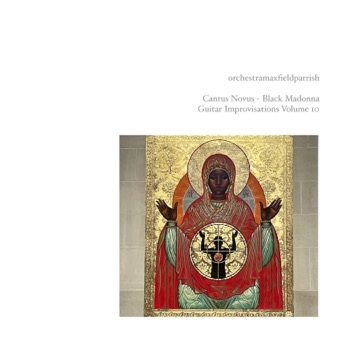
orchestramaxfieldparrish
Cantus Novus - Black Madonna
Guitar Improvisations Volume 10
fs 84
All hail, the coming of the New Age, for it is the new that replaces the old.
July 2024
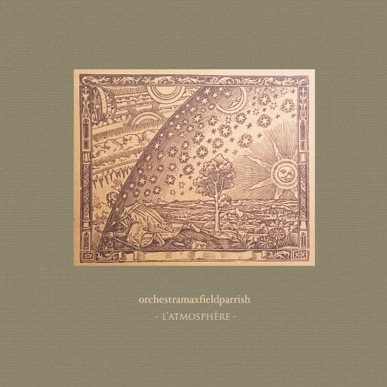
orchestramaxfieldparrish
L'atmosphère
fs82
There is no reason to look back toward his origin: everything that came before appears at toytown scale against the enormity of his present purpose.
Curtains of flames replace the alchemical sun of his old world. In this lacerated empyrean, the planetary bodies move like clockwork.
A cosmic machinery whirring along in adherence to laws yet to be discovered.
This land seems to us fixed for eternity, sitting on century-old foundations, crowned by a sky at times pure and at times cloudy, extended so as to form the unshakable foundation of the universe.
The Sun, the Moon and the stars seem to turn around her.
The Life Electric
L’atmosphère
Le Stelle
This is stream of consciousness. This is music improvised and performed in a sacred sanctuary at 4am as a new dawn arrives, never to be repeated the same again.
- peace.
m • ƒ
“I would like to know the stars again as the Chaldeans knew them, two thousand years before Christ. I would like to be able to put my ego into the sun, and my personality into the moon, and my character into the planets, and live the life of the heavens, as the early Chaldeans did.”
— D.H. Lawrence
Available digitally everywhere.
April 2024
orchestramaxfieldparrish
And Rise To Sky
fs 75
March 2024
orchestramaxfieldparrish presents ÆRA
Engineered God
fs 74
February, 2024
orchestramaxfieldparrish
En Plein Air
fs73
Digitally in 24 bit at select outlets.
In 16 bit at all others.
November 2023:
orchestramaxfieldparrish
The Wandering Moon
fs71
Hi-Res Lossless 24 bit / 96 K version available through Apple Music, Amazon HD and Tidal.
16 bit CD quality downloads from:
Juno and everywhere else:
https://music.imusician.pro/a/QUPgXSaJ
October 2023:
orchestramaxfieldparrish
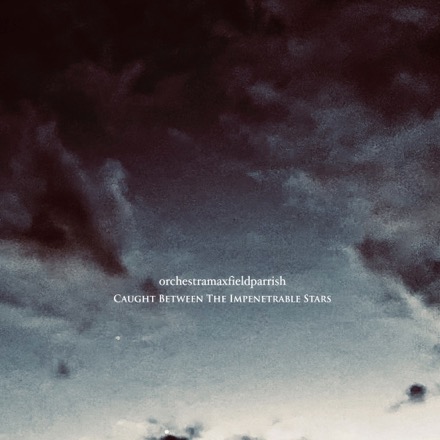
Caught Between The Impenetrable Stars
fs70
“Most men and women lead lives at the worst so painful, at the best so monotonous, poor and limited that the urge to escape, the longing to transcend themselves if only for a few moments, is and has always been one of the principal appetites of the soul.”
― Aldous Huxley
Hi-Res Lossless 24 bit / 96 K version available through Apple Music, Amazon HD and Tidal.
16 bit CD quality downloads from:
November 2023
orchestramaxfieldparrish
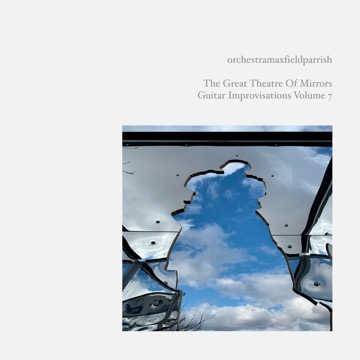
The Great Theatre Of Mirrors (Guitar Improvisations Volume 7)
fs53
Hi-Res 24bit / 96K remaster is now available:
The Great Theatre Of Mirrors
October 2022:
orchestramaxfieldparrish
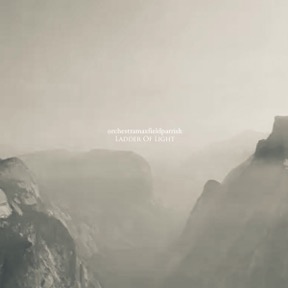
Ladder Of Light
fs65
Previously unreleased archival recording from 2012.
Recorded directly after All At Once The Remote Go Forth My Soul And My Seeking, The Unknowable Becomes Known in 2012, which was released by Ian Holloway's Quiet World label from Wales, I was approached by another independent label on the strengths of that release. This session was done during the same week and I thought it would be appropriate for this request. After initial discussions about distribution, delivery of final master and considering it a done deal, all contact with them went unanswered and became futile. Later I found out the company quietly went out of business and closed down. Until this day I do not have the master 1/2" tape I sent, but thankfully I still had the original 8 track reel to reel tapes.
The session was done with one improvisational pass of electric guitar, a chambered body Klein that was made for me by Lorenzo German, alternately tuned, into a four amplifier setup with about 8 fuzz boxes and several other devices. Additional noises were done on a prepared guitar set up, ie: Fred Frith, Keith Rowe. The field recordings were all taped from a portable DAT recorder that was my trusty companion for many years, further manipulated and contorted in a laptop.
I eventually lost track of this session until recently I came upon it and once again listened back to it and thought it was suitable for release at this time and did a proper remastering of the music.
Here is the original finished work, albeit redone from slightly deteriorated analog tapes at this point. But knowing things like this are fashionable now, maybe some will find this fashionable as well. Looking back, this sounds a bit like a revisiting of my Silent Breath Of Emptiness from 2008, but in a distinctly more experimental, industrial, Musique concrète vein and it foreshadows some of my present Guitar Improvisation releases, but to be honest, I have been playing like this for decades for those who have not been a part of my journey. I think I had Organum in mind when recording this as I often do. The cover photo was taken from one of my many Colorado wilderness hiking sojourns.
We climb from out of the abyss on a ladder of light.
With peace,
M. Fazio
October 2022
Spring 2022:
Three new orchestramaxfieldparrish albums to be released.
orchestramaxfieldparrish
Four Thousand Trees
fs64
"One of the best ambient albums of 2022" - textura
Limited edition 10" clear vinyl handmade lathe cut with handmade cover and printed insert, of which only 25 are publicly for sale.
Recorded between July 27, 2021 through December 17, 2021.
Consists of 2 long form compositions which will also be released digitally in 24 bit fidelity.
Inspired by and dedicated to Ziya Abay.
Side A - Island Of Memories - 12:40
Side B - Four Thousand Trees - 13:22
______
orchestramaxfieldparrish
Ancient Exiles, Tell Me About Your Seas
fs62
A new full length album produced during March 2022.
This is the logical successor and fourth chapter in the deeply personal musical path first started with Crossing Of Shadows, followed by Instant Light and then continued on The Mysteries.
1. Farewell here, no matter where. - 07:44
2. the breaking wave - 14:36
3. It’s found we see. – What? – Eternity. It’s the sun, mingled with the sea. - 05:26
4. As for the world, when you emerge, what will have become of it? Nothing, in any case, of its present seeming. - 04:36
5. Arrival from forever, you who’ll depart everywhere. - 10:32
6. …it shall be a place for the spreading of nets in the midst of the sea. - 05:20
This will be a 24 bit digital release on June 1, 2022.
_______
orchestramaxfieldparrish
Passio - The Exiles Companion
fs63
This short ep length (15 minute) three track release is a vastly stripped down rendering of Ancient Exiles, Tell Me About Your Seas using only organ as it's focus and will be released at the same time as Ancient Exiles.
1. частина перша - 04:24
2. частина друга - 05:28
3. частина третя - 05:10
The orchestramaxfieldparrish project after many years, has now moved onward, as of the release of The Clouds Of Michelangelo on textura in 2019:
https://textura.bandcamp.com/album/swallowed-by-the-sky
and has been divided into three distinct musical projects being released since the past 3 years and will continue to do so as:
orchestramaxfieldparrish
Guitar Improvisations
ÆRA
These three new releases fall under the small orchestra scenario utilizing performances of guitar, other stringed instruments, keys, percussion and vocals of orchestramaxfieldparrish, with strictly guitar generated live compositions being released under Guitar Improvisations and mostly synthesizer generated live compositions being released under ÆRA.
All three divisions are 100% improvisational in nature.
- peace.
www.faithstrange.com
https://faithstrangerecordings.wordpress.com
https://www.instagram.com/faithstrange_recordings/
January 2022
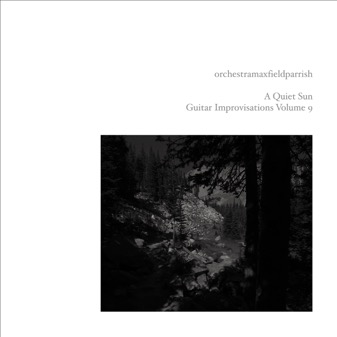
orchestramaxfieldparrish - A Quiet Sun (Guitar Improvisations Volume 9)
fs56
recorded January 2022
info:
August 2021:
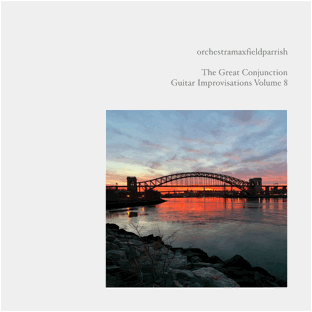
orchestramaxfieldparrish - The Great Conjunction (Guitar Improvisations Volume 8)
fs56
recorded July 2021
June 2021:
orchestramaxfieldparrish - The Great Theatre Of Mirrors (Guitar Improvisations Volume 7)
fs53
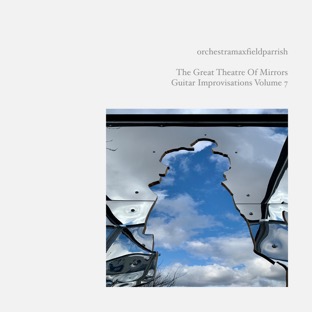
November 2023
Hi-Res 24bit / 96K remaster is now available:
https://music.imusician.pro/a/4r0K8ynF
Recorded June 2021
I Am The Soul
I Am The Light Divine
I Am Love
I Am Will
I Am Fixed Design
Remastered May 17, 2023 using a reproduction of the EMI recording desk used for Dark Side Of The Moon.
April 2021:
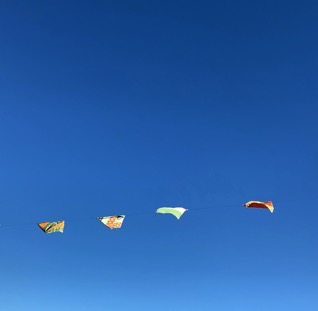
orchestramaxfieldparrish - After The Rain / The Mysteries
Artist Statement:
In 2007, I began a most introspective journey of capturing my childhood into musical statements as sort of a time capsule, a backwards glance for myself, one that was yearning to be released and be set free, into the world. Unable to and not being interested in taking on such a task since my own earliest days of first venturing into the world of musical expression during the 1980’s, the time had now come to spread my wings. This existential result was Crossing Of Shadows, an album that I will forever be proud of and had been fortunate to have produced and will forever be at peace with. Later on I realized that this metaphysical journey I was embarking on might also serve as a window for those I had known in my own life as well as for those not yet known, who might have somehow had a similar journey for themselves and would welcome the opportunity of a backwards glance, one that had been long forgotten or a deliberate attempt to suppress was previously made. The second statement in this very personal journey resulted in the release of Instant Light years later. Windows of other times, other lifetimes, future lifetimes. An embrace of light as well as the shadows between the rays of light. For each cannot exist without the other.
Although this all would be ultimately impossible for others to fully grasp since we are all unique and have been formed throughout the years with the essences of each of our distinctive pasts, our joys and accomplishments and scars that have been left upon our individual souls.
This past year, for all of us, was one of intense introspection, yearning, sadness, disbelief, anger, darkness. I made the conscious decision very early on that I, as well as all that were around me would not be stilled, fallen, darkened, that I would expend as much positive energy as my mortal being could muster in order to guide myself and hopefully others that have touched my heart towards a light. A light that was intentionally being held from all and still is to some. Beginning in March 2020, and unable to realize my travel plans, I returned to working at night, sometimes all night long, in order to translate my thoughts through spontaneous improvisation directly to hard drive. Coupled with my voracious appetite for reading ancient texts, mythology, theosophy and world history by day and trying (as much as I possibly could) to avoid the deluge of negativity from the American political, moral, ethical and cultural collapse.
The death of Genesis P-Orridge in March of 2020 who I had been lucky enough to have crossed paths with was the impetus and strength to finally finish A Guide For Reason’s ‘Amerika (The Revolution Will Not Be Televised)’, which began in early 2018 and with Gil Scott-Heron’s lyrics from 1971 eerily forecasting the events of our times. The freshly-painted mural of Scott-Heron on the side of a bodega I came upon one sunny Summer morning on Avenue D in Loisaida gave the initial inspiration. It is Genesis and Gil that the release is dedicated to. Thus began a new musical chapter for me, one that I had no idea how would manifest itself and one which I had no intentions on directing its course.
The A Guide For Reason project began as music sharing between myself and Peter Christopherson during the last days before his untimely passing, whilst he was just forming the X-TG project, as we had connected through MySpace, at the time, the only digital platform that allowed totally unfettered musical expressionism between like-minded artists, unfortunately ending too soon and before our present day musical state of total self-gratification and its lack of grassroots musical communities, all caused by intentional materialistic corporate social media currents as we now have. My long time love for the COIL project and all that were connected to it has and always will be a guiding force for AGFR so long as I decide it will continue as a vehicle for personal expression.
Shortly afterwards in the Summer of 2020, my focus returned to the orchestramaxfieldparrish project with the result of completing and releasing the 6 volume Guitar Improvisations set. Enveloped within the midst of the pandemic, with skyrocketing manufacturing and postage costs, with no where to play live and the growing trend for listeners to streaming services and away from traditionally collected musical formats due to increasing worldwide unemployment and despair, it was impossible to release this box set on CD or LP even though elaborate artwork was created for both formats and preliminary orders were established for manufacturing (thinking that this incredibly dark chapter for us would be ending soon) all ultimately abandoned. Instead releasing it on USB drive (a platform that Peter had embraced) with the addition of a printed book, I felt that that would be adequate at the time, albeit a poor substitute for my original intentions.
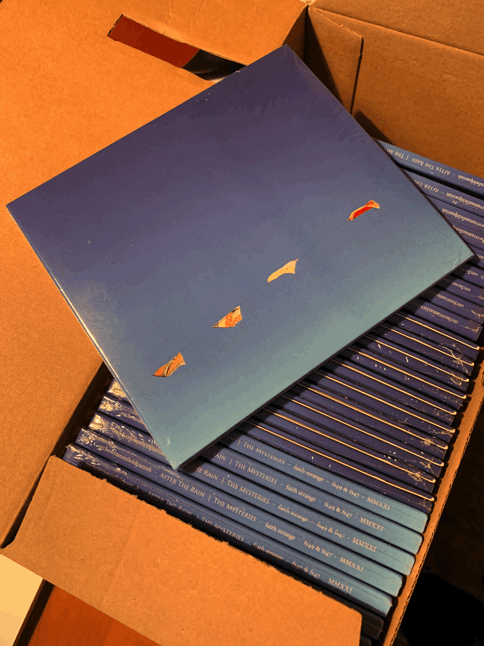
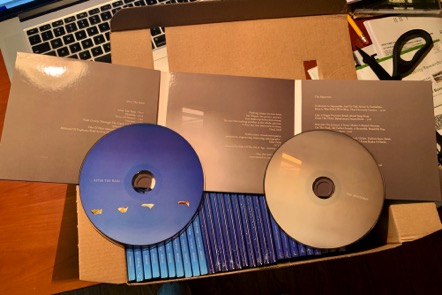
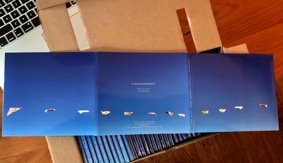
Being purely guitar based and having decided that this sprawling collection was a healthy enough statement for my own solo guitar expression, I once again returned to other instruments, treatments and processing to incorporate into guitar generated statements, as was the case for Crossing Of Shadows and Instant Light. The result was not one, but two volumes: The Mysteries and After The Rain. Both improv based but grounded in the Neo-Classical and most importantly, centuries-old Devotional musical traditions of several past ancient cultures, particularly relying on heavy use of silence and dynamics. Again, being mired with pandemic consequences for independent artists to release music on hard formats and with After The Rain resulting in a double LP of music, I made the decision to release these two volumes as digital editions with a limited edition compilation planned for double CD for those that still wish to have music in this format.
Thus, The Mysteries and After The Rain continue my original concept I had envisioned back in 2007. A quadrilogy or tetralogy so to speak, at least for now.
“Follow your bliss. Find where it is, and don’t be afraid to follow it.” - Joseph Campbell
Mike Fazio
NYC
** For International inquiries:
You might be better with postage from your individual Amazon website and eBay sellers that are carrying After The Rain / The Mysteries
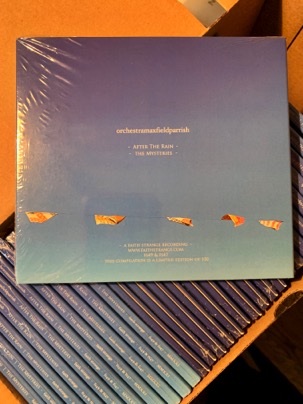
September 2020
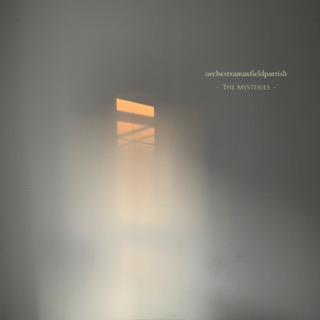
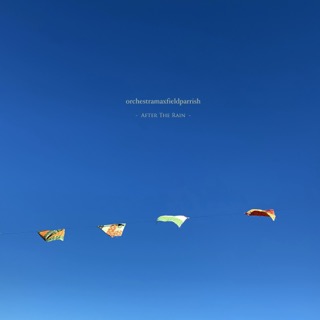
orchestramaxfieldparrish - The Mysteries - fs 47 / AfterThe Rain - fs 49
Both in digital download and streaming formats available Summer, 2021,
Limited edition double CD compilation now available exclusively through faith strange.
August, 2020
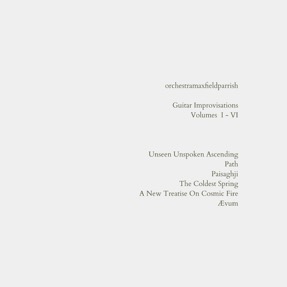


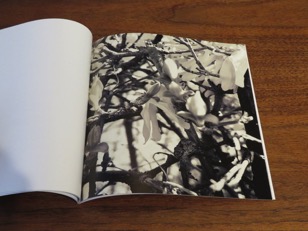
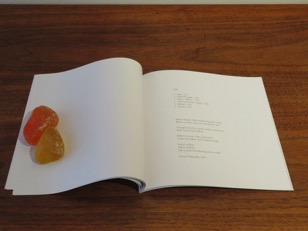
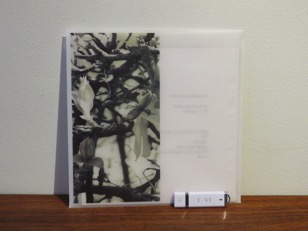
released August, 2020:
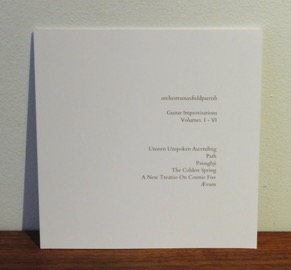
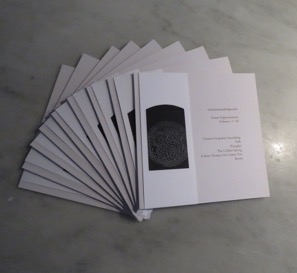
orchestramaxfieldparrish - Guitar Improvisations Volumes I - VI
(strange box three)
Strictly one time limited edition of 100.
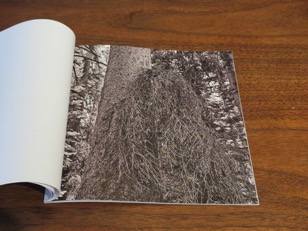
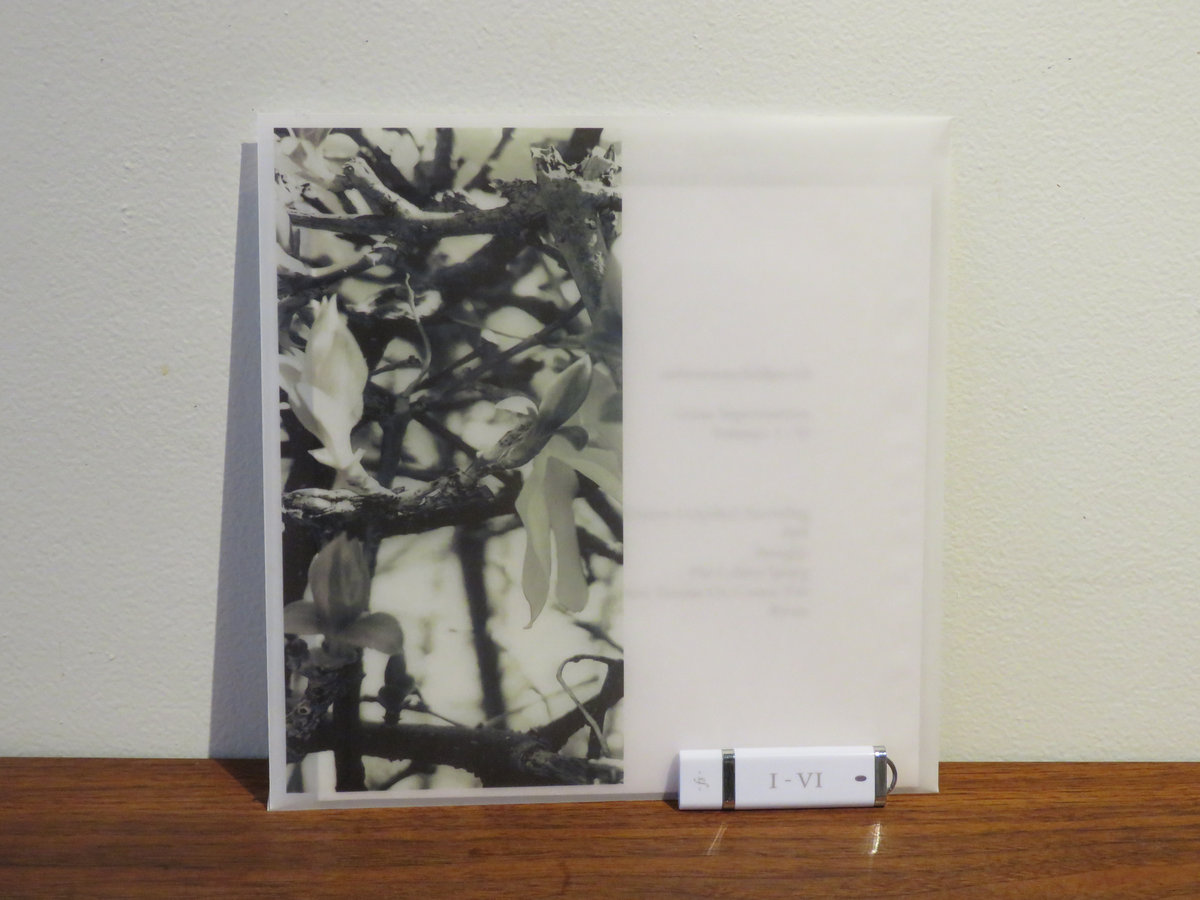
6 new albums with 32 page 4 color printed perfect bound book, handmade OBI and 4 color printed vellum outer sleeve.
Recorded between February 1, 2020 through May 6, 2020 in New York City.
All 6 albums published in WAV audio on printed USB drive.
Mastered in 64 bit High Definition audio.
Volume I - Unseen Unspoken Ascending (fs38)
Volume II - Path (fs39)
Volume III - Paisaghji (fs40)
Volume IV - The Coldest Spring (fs41)
Volume V - A New Treatise On Cosmic Fire (fs42)
Volume VI - Ævum (fs43)
These guitar improvisations were entirely done spontaneously and manipulated, treated, looped and mixed in real time to stereo. There was no thought beforehand that went into these stream of consciousness performances other than a very human response to the pandemic that has befallen our beautiful world in the Spring of 2020.
This compilation of six albums is dedicated to all the innocents that lost their lives and those that will lose their lives to something I deeply feel was totally avoidable on many levels, if indeed, the world had the proper ethical governmental, corporate, humanitarian and environmental leadership to have stopped this mass murder beforehand.
May all that need this music, find this music.
- peace.
M. Fazio
Purchase here
from textura:
orchestramaxfieldparrish: Guitar Improvisations (Volumes I - VI) Faith Strange
Mike Fazio's six-volume Guitar Improvisations is an extraordinary document of unfiltered, real-time artistic expression; witnessing the live creation of material by a single musician, especially when it's so marked by honesty and authenticity is an always special experience. A more personal statement by him couldn't be imagined as everything associated with it was created him—music, production, mastering, photography, and packaging. It's available as a download, naturally, but is best experienced in its physical form, Fazio having prepared a 100-copy edition that sees a USB drive containing the volumes' tracks packaged with a thirty-two-page booklet inside a semi-transparent vellum sleeve. Adding to the poetic dimension of the project, quoted passages by Rumi (“As you start to walk on the way, the way appears”), Albertus Magnus (“Heaven is moved by a soul that is conjoined to it”), and others accompany the respective set-lists. (In the spirit of full disclosure, orchestramaxfieldparrish material has appeared on two of textura's four releases. Enthusiastic endorsement of this new release originates, however, not out of a desire to support an artist whose efforts have enriched our products; it's more the case that the exceptional quality of this six-volume set reminds us once again of the many reasons why we approached Fazio in the first place to be a part of textura's releases.)
Recorded between February and May 2020 in New York City, the pieces (all first takes) were done as stream-of-consciousness performances; whatever manipulations, treatments, and loops are present also happened in real time. Fazio describes the settings as pure expressions aside from the fact that they also symbolize his personal response to the pandemic and are dedicated to the vast number of people whose lives were lost to it. The three-and-a-half hours of guitar playing are accompanied in a couple of instances by field recordings collected in Colorado and Wyoming during the fall of 2019 (bird twitter in “Valya's Willow,” for instance). As listeners familiar with his earlier work are aware, Fazio is a master of texture, and to that end the pieces' linear expressions are augmented by layers of atmospheric elements.
The six volumes present twenty-four pieces, each distinctly titled and collected into separate groupings of three, four, and five tracks, the last volume the exception in featuring a single, half-hour setting (the all-encompassing “Ævum”). The music can be absorbed as separate sets, of course, but my preference is to treat the release as a totality; broached in such manner, the far-reaching scope of the project is brought into sharper relief and the magnitude of the accomplishment all the more clear. Being real-time improvs, an occasional ‘accident' occurs; rather than correcting such moments in post-production, Fazio opted to leave them, a wise move as doing so only enhances the music's authenticity. An occasional click from a guitar pedal is audible also, it too reinforcing the personal dimension of the project.
Electric guitar is the primary sound-generator, aside from the first volume's “The Sunlit Path” where acoustic guitars and autoharp also appear. Aggressive and peaceful sequences occur in equal measure, the music often contemplative in its patient, searching unfolding (“Path,” “Valya's Willow”) but elsewhere forceful, such as when ripples sweep boldly across the music's surfaces in “Ascent.” Particularly beautiful is the meditative “Heatherlands,” the first of three extended soundscapes on the Paisaghji volume, for the way its lustrous drones drift and echo for minutes on end. In keeping with its title, “Canyonlands” likewise stretches out, as does “Dolphy Feathers,” its seventeen minutes an ethereal hall-of-mirrors packed with spectral presences, e-bow-like flourishes, and ominous rumblings.
The fifth volume's title, A New Treatise On Cosmic Fire, cheekily riffs on an infamous instrumental epic from Todd Rundgren's Initiation. With much of it exuding a kind of wide-eyed wonder, the dazzling “Vishudda - Sounds Beyond Ears” in particular, Fazio's mesmerizing creation proves easier to digest than his counterpart's was deemed at the time of its 1975 release. The first of five parts, “Anahata - The Halls of Air” is suitably spacious in its evoking of some mystical architectural structure; animated by comparison is “Muladhara - The Dance of Kundalini.”
Fazio possesses an encyclopedic familiarity with other guitarists, past and present, and he'd be the first to acknowledge them as influences. Yet while a trace of Fripp does surface in a few pieces, Fazio is a true original, an artist of the utmost integrity incapable of doing anything but follow his own path. In that regard, Guitar Improvisations captures the sound of him letting his muse speak as directly as possible. It is, all told, a remarkable statement.
October 2020
October 2020
from Vital Weekly:
Mike Fazio, the man behind Orchestramaxfieldparrish (and also the Faith Strange label and a host of other monikers), loves to present his work quite lavishly. This USB comes in a small paper bag, attached to a finely printed, 32 pages 7" sized booklet with full-colour photographs and text. 'Volumes', as mentioned in the title, is something we have to take literally. On the USB device, there are six folders, volumes, each a
bunch of pieces, ranging from one to six. In total, this is more than three hours worth of music.
As this is (hopefully!) the last day of the local heatwave (and I will shut up about it also) with hardly any sunshine and loads of clouds, waiting for the thunder to end it all, I sunk back, once more, in my chair with a big book ('These Truths, A History of The United States' by Jill Lepore, if you must know) and continued reading while in the background, Fazio plays his guitar, "spontaneously and manipulated, treated and looped and mixed in real-time to stereo" and there have been very few overdubs, except for some field recordings here and there and some extra layers of guitars on a few others. All of this was recorded during what Fazio calls the cold spring of 2020, and that is not just a temperature thing. It all has to do with the pandemic thing; isolation and death. As such the somewhat grey day helps me to enjoy what I hear. I found it hard to say, once the music was over, which
track stood out, and which not.
Fazio uses a lot of sustaining sounds, probably sampling his e-bow on the strings, and creates extended fields of drone music made with a guitar. As such, each piece is the same, maybe, or each one is a different colour variation of the same thing? I know when I write that you might think 'oh, all the same for three hours', but that it is not. There is quite some variation in here. Sometimes Fazio adds some shorter strumming notes to the menu (in 'Muladhara - The Dance Of Kundalini'), or some more dissonance (in 'Vishudda - Sounds Beyond Ears', at almost three minutes the shortest piece here).
It is music to sit by and watch it happen, flow along. It might not be that different from say what Dirk Serries did with his Microphonics projects and many other guitar slingers before and after that, but I thought this was all a wonderful trip. (FdW)
orchestramaxfieldparrish - Unseen Unspoken Ascending (Guitar Improvisations Volume I) (fs38)
orchestramaxfieldparish - Path (Guitar Improvisations Volume II) (fs39)
orchestramaxfieldparish - Paisaghji (Guitar Improvisations Volume III (fs40)

orchestramaxfieldparish - The Coldest Spring (Guitar Improvisations Volume IV) (fs41)
orchestramaxfieldparrish - A New Treatise On Cosmic Fire (Guitar Improvisations Volume V) (fs42)
orchestramaxfieldparrish - Ævum (Guitar Improvisations Volume VI) (fs43)
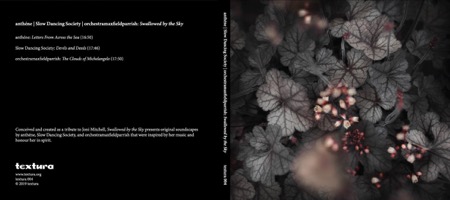
August 1, 2019
'Swallowed by the Sky', conceived & created as a tribute to Joni Mitchell,
'Swallowed by the Sky' presents original soundscapes by anthene, Slow Dancing Society, and orchestramaxfieldparrish
that were inspired by her music & honor her in spirit.
track listing: 1. anthene - 'Letters From Across the Sea' (16:50)
2. Slow Dancing Society - ' Devils and Deeds' (17:46)
3. orchestramaxfieldparrish - "The Clouds of Michelangelo (17:50)
Exclusively through textura
https://www.textura.org/pages/archives.htm
| Faith Strange is very proud to announce the release of not one but two new orchestramaxfieldparrish titles. There are only 100 copies printed of each of these cd's in gatefold digisleeves. Ordering / listening / downloading at this point is through Bandcamp (click on album cover or title to bring you to it's Bandcamp page). For those who just wish the limited edition CD's without downloads, please visit the Faith Strange Shop (link is in above main menu). Cheers. |
| Instant Light |

orchestramaxfieldparrish - Instant Light (fs32 / Archival Works No. 3)
Three years in the making, the first new orchestramaxfieldparrish album since 2010's beloved classic 'Crossing Of Shadows'. A masterful concoction of processed treated guitars, field recordings, singing bowls, metals and modular synthesis and electronics, solidly in the vein of the best Coil ambient masterpieces, this is truly moon music. Extraordinarily conceived and produced, and expertly recorded and mastered in the highest of fidelity.
preview on SoundCloud
| A Midsummer's Night |

orchestramaxfieldparrish - A Midsummer's Night (fs33)
2016 sees Mike Fazio revisiting his beloved orchestramaxfieldparrish project with not one but two new releases and with 'A Midsummer's Night' has produced yet another experimental guitar manifesto to add to his catalog of unconventional recordings. Stretching the conceived notions of what guitars can actually do, this album showcases a rare 1936 Gibson L7 archtop with an antique mellophone, a German lute guitar and a treated baby grand piano, very different acoustic instruments that sound nothing like you can possibly imagine them to sound after recording them through a series of unconventional effects. This album solidly stretches the limits of what experimental guitar is all about. Expertly recorded and mastered in the highest of fidelity.
preview on SoundCloud
REVIEWS:
from musiquemachine:
orchestramaxfieldparrish - A Midsummer's Night [Faith Strange - 2017
A Midsummer's Night, released in 2016, is three years later still the most recent work from avant-ambient guitarist Mike Fazio's orchestramaxfieldparrish alias. Like all of Fazio's music, it is self released on his own Faith Strange label in a limited edition, an edition of 100 copies in this case. As a long time fan of Fazio's experimental guitarscapes, I am honored to own a copy.
The liner notes describe these pieces as 'music for prepared guitar & treatments', except for the last piece, which uses a piano. Fazio's digital processing transforms the guitar into a refined etheric mist, an unreal smooth momentum of astral dimensions. His plucks are stuttered and finely sliced into thousands of glittering granular beads, artificially charged with color and tone. The peak of brightness and volume near the end of opener "Head to Heart" is an exhilarating white rush of resonance, a manic thrill of godlike delusion.
As always, Fazio is content to dwell within free rhythm space, to emerge from the opacity of silence and then retreat back into it, to faintly tint the air of the space but leave it transparent. From swell to swell we move, happening at times upon chords and discordant shrouds. The rattling of strings is occasionally audible, but rarely a clear pluck or the punctuated beginning of a note, as this would disrupt the fluid glide of its unfolding.
Passages of his music come close to the lush compositions of melancholic classical ambient masters like Kyle Bobby Dunn or Stars of the Lid, who similarly utilize processed acoustic instruments. However, these artists favor gradually unfolding structured melodies in their work, and Fazio's tendency is toward a kind of exploratory anarchy, a continuous testing of the abyssal waters, a divination technique from which entities of ambiguous, asymmetric form emerge.
By the third piece, we've completely left the realm of recognizable guitar playing, and the sound is a howling solar wind, a metallic billowing with such a crisp, subtlely dimensioned layering that I would swear it was acoustic in nature. Further into the dreamlike and farther from the familiar, this point in the album is the deepest of night where emotions have distorted under the crushing weight of vertiginous currents.
The glittering blackness of lengthy closer "It Just Is" is truly nightmarish, an expression of fear and smallness in the face of all consuming vacuum. Perhaps a pessimistic ending, I am struck by Fazio's uninhibited spirit of embracing darkness. Snaking, smoking and eerie, this is certainly the most difficult piece on the album.
Fazio has surely stepped up his trademark methods of composition for this album, one of the most starkly vibrant and expressive of his career. His gift for morose melody is more thoroughly employed here, one of his most focused and directed feeling sets. While free association remains the core of his approach, I can really feel the emotional drive behind the choices he made for this album.
Now to track down the newest full lengths from his A Guide for Reason and Mike Fazio aliases!


Josh Landry
One of the Best Of 2016 at textura
from Musique Machine:
| Experimental ambient guitarist and composer Mike Fazio has been playing and performing for decades now, really coming into his own during the 2000's with a profific string of soundscape albums under a variety of aliases on his own Faith Strange label. Since the release of "Crossing of Shadows " in 2007, Fazio hasn't released any music under the orchestramaxfieldparrish alias, focusing on other aliases like A Guide For Reason and Sonic Arts Society, as well as putting out several albums under his own name. While there may be thematic ideas behind each alias in Fazio's mind, generally I find his style remains reliably consistent. He tends to create a sort of tonal soup, a free rhythm soundscape fashioned from heavily processed instrumental noodling, awash in glints and glimmers. It is resplendently resonant, wet, and glowing, tuneful at times, but almost completely impromptu and unstructured. It is also immediately emotionally relatable, a sort of mournful, weary peace, with occasional brooding excursions into paranoia. Fazio chose to resurrect the orchestramaxfieldparrish name in 2016 with two new albums. "Instant Light" is one of his most quiet and abstract works, in which his guitar is not immediately obvious. it is also one of his most complex and varied, new sounds emerging from the corners and crevices at a constant pace, completely transforming the ambient environment every three or four minutes. The improvised feel is diminished on this recording, which is highly composed and layered. There are the mesmerizing sounds of bells, and natural recordings cleverly intermingled with their digital imitations: crashing surf, rain, and distant thunder. In the 2nd piece, I hear the soothing halcyon chords of dub techno, warmly flickering from behind a membrane of thick honey. Angelic, choral pads swell and surge out from the deep. I am reminded of the ethereal consonant zen of early ambient pioneer Iasos. As such, this is one of Fazio's most peaceful and contended albums, in contrast to the "Interiors" album from 2013 under his own name, with its brooding sampled musings about death. The 3rd track feels much like classic 90's downtempo with its dreamy two chord alternation, taking the yearning tonalities of house and chillout music and floating them in an endless expanse, scrambling the rhythms into a mild flickering and shifting. Fans of Ishq or Vladislav Delay would likely enjoy this, as they have done a similar thing. Fragmenting the notes into scintillating tiny shards and refashioning sounds from the particles, the result is something of a tuned cloud. Are these obliterated chords sourced from a synthesizer, a guitar, or something else? With Fazio, it's impossible to tell, as digital processing is his forte. There are no lapses into pure silence as one might find on an A Guide For Reason release. An airy drift underlying the entire piece, an infinite reverb contrail. Each of the three lengthy tracks begins with a return to field recordings of a thunderstorm. The bells from the 1st piece are reprised in the 3rd. There is a great thematic unity to the album as a whole. The album ends with a receeding siren wail, which lasts nearly ten minutes. This is one hell of a beautiful space trip. It might even be my favorite Mike Fazio album, and I am a longtime fan. It is an ambient recording with astonishing textural beauty, compositional depth and complexity, engaging from start to finish. |


from textura:
orchestramaxfieldparrish: Instant Light Faith Strange Recordings
orchestramaxfieldparrish: A Midsummer's Night Faith Strange Recordings
Of all the group and solo projects with which Mike Fazio has been involved (A Guide For Reason and Gods of Electricity, to name but two), it's his orchestramaxfieldparrish that is my favourite. In fact, so dazzled was I by 2008's The Silent Breath of Emptiness, I contacted him about the possibility of creating something for textura's first label release, Kubla Khan; not only did he contribute the magnificent “Waning Moon Over Sunless Sea” to it, he mastered the album, too. Subsequent to that, Fazio released the mesmerizing Crossing of Shadows in 2007, as well as To The Last Man / Index Of Dreaming, though that set appeared in 2009 under the orchestramaxfieldparrish presents ÆRA alias. Issued on his own Faith Strange imprint, as much of his output is, Fazio has just made two new orchestramaxfieldparrish releases available, both of them well worthy of one's attention and equally distinguished examples of his highly developed artistry.
Though different instruments are used on the four tracks of A Midsummer's Night, an impression of unity is achieved when processing treatments are applied liberally to all four. Two pieces were created using prepared archtop guitar, another pizzicato lute guitar and mellophone, and the fourth piano. The opening “Head To Heart” illustrates Fazio's mastery at sculpting sound and handling pacing and dynamics. For nine minutes, shimmering swaths of archtop guitar advance and recede, the thrum and rumble of the instrument suggestive of waves rippling ashore. The sound tapestry expands on “In These Long Years” when rapid, spidery strums of the pizzicato lute guitar are countered by the muted, horn-like murmur of the mellophone, whereas the treatments applied to piano on the twenty-three-minute “It Just Is” radically transform the instrument into an uninterrupted, pulsating stream wherein piano clusters occasionally surface. In all four settings, sounds advance with a precision that feels almost scientifically calibrated, the elements' movements managed by Fazio with the kind of sensitivity that comes from a lifetime of musical practice.
Though recording info beyond that already mentioned doesn't appear on A Midsummer's Night, one guesses it's the more recently recorded of the two sets when details included with Instant Light clarify that its two parts were recorded in 2013 and 2009, respectively; a note on the inner sleeve reveals that Instant Light comprises “private, archival works not originally intended for release,” and a detailed account of the background leading up to the release appears, too. The range of instruments on Instant Light is also greater than On A Midsummer's Night, with Fazio augmenting his customary electric guitar (prepared, processed, glissando, treated) with singing bowls, metals, electronics, modular synthesis, and field recordings (collected between 1988 and 2013).
The presence of singing bowls and field-recorded rain on “...They Would Fly Upwards” immediately individuates Instant Light from A Midsummer's Night. Not only is the sound palette different, but there's also a tonal shift whereby the former's direct connection to the physical world makes the latter seem more ethereal by comparison; further to that, the resonant ping of the bowls lends the peaceful setting an almost Gamelan character, something absent on the other recording. Far stormier is “And Be Carried Off and Vanish,” which also threads generous helpings of Fazio's guitar playing and bold electronic treatments into a swirling mix that grows ever more celestial as it advances towards its nineteen-minute end. The recording's so-called second part “When Your Dreams of a Perfect Tomorrow Come True” perpetuates the texturally rich soundscaping style of the first with shimmering, metal-tinged surges that convulse, reverberate, and billow with controlled regularity.
If there's anything regrettable about this exceptional pair, it's that only 100 physical copies of each have been produced (though they are available digitally, too). In a perfect world, there would be a place for explorative music of such genuine quality in thousands of receptive listeners' homes, but such a world, alas, doesn't seem to be the one we inhabit.
November 2016
from Vital Weekly:
orchestramaxfieldparrish - A Midsummer's Night (CD by Faith Strange)
orchestramaxfieldparrish - Instant Light (CD by Faith Strange)
Did I hear of orchestramaxfieldparrish before? I don't recall, and it is a strange name, so I would have
probably remembered, I guess. This is another project by Mike Fazio, who works also as A Guide For
Reason and Sonic Arts Society, though I know him best under his first moniker. He is also part of
Chill Faction, Gods Of Electricity and Life With The Lions. I must admit to be a bit at a loss as to the
exact musical differences between his various projects. I do know however the difference between
these two releases.
'A Midsummer's Night' has four pieces and seems to have recent recordings. For each of these
pieces the cover explains what is going on here, so the first is 'music for prepared archtop guitar and
treatments', the second is 'music for pizzicato lute guitar, mellophone and treatments', etc;
obviously I have no real clue what these preparations are or in what way Fazio plays them, let alone
what kind of treatments he applies. I can only assume that he plays his instruments in a more or
less improvised way and then adds a whole bunch of electronic sounds, and/or feeding them through
modular synthesizers to arrive at what becomes a cross-over between something more improvised
and ambient music. Via the extensive use of reverb and such like he suggests all this great space
and atmosphere, and somewhere buried along we find the origins from the instruments. It makes
that 'A Midsummer's Night' is not your standard ambient album, as orchestramaxfieldparrish makes
it sound grittier perhaps, atmospheric but with a fine twist, and as such this is quite a fine album.
On 'Instant Light' there are three pieces, and from what I gather the sounds used are a bit older
and this is the one that started Fazio off thinking about orchestramaxfieldparrish again, after an
initial flow of releases between 2007 and 2010. These three pieces are less rooted in the world of
instruments it seems but it might use a lot of sound effects, field recordings, singing bowls, metals,
modular synthesizers but according to the cover also guitar on the final piece, 'When Your Dreams
Of A Perfect Tomorrow Come True', but whereas on 'A Midsummer's Night' the instruments play an
important role and it all sounds a bit more improvised, the music is all the more ambient. Everything
is covered with a sufficient amount of reverb, delay and with the soft tinkling of bowls it all becomes
very meditative. In 'And Be Carried Off And Vanish' no more bowls and just a delicate process of field
recordings. Whereas I did enjoy both releases, I must admit that if I had to choose between the two,
I would go for the 'Instant Light' release, perhaps because it had a great flow of electronically
processed sounds, some great production and maybe for a calm Sunday afternoon the most fitting
soundtrack.
All of this made me curious to the older works by orchestramaxfieldparrish and why I never
heard those in the first place. Both CD are limited to 100 copies and have the usual high quality
artwork. (FdW)
––– Address: http://www.faithstrange.com/
| orchestramaxfieldparrish - The Silent Breath Of Emptiness (CD by Faith Strange) orchestramaxfieldparrish - presents AERA (2CD by Faith Strange) orchestramaxfieldparrish - Crossing Of Shadows (CD by Faith Strange) All right first of all, I know I set some 'rules' when it comes to reviewing old stuff and so, when I wrote in Vital Weekly 1054: "Did I hear of orchestramaxfieldparrish before? I don't recall, and it is a strange name, so I would have probably remembered, I guess. This is another project by Mike Fazio, who works also as A Guide For Reason and Sonic Arts Society, though I know him best under his first moniker", it wasn't an exactly an invitation to get his much older releases, but Fazio offered them anyway to send to me as mp3, just to check out, not to review, but lo and behold, he didn't find the mp3s but then send me the three first releases, that followed 'Tears', his debut in 2002. Sucker that I am, I feel obliged to do a full pay back and review them anyway. I played them in the order they were released. Or not. On 'The Silent Breath Of Emptiness' the guitar is the primary instrument, an electric one, and, so I assume, there is most likely quite a few audio processors, mainly the delay pedals at work here, along of course with a dashing amount of reverb. All of this was recorded live in the first four parts of this, while the fifth piece is a studio reconstruction using those parts in a different configuration. With his electric guitar and sound effects, plus what I assume is an e-bow, regular bow or otherwise methods of getting his strings to sustain on some end, Fazio creates quite dark atmospheric music here, and it is not something that is without any force. In the third part his guitar sounds like an organ at times and towards the end almost like a conveyer belt, but it's not in anyway industrial music. In the other pieces Fazio takes the Fripp textbook on how to play ambient guitar quite literal and he does a great job, adding his own slightly darker and experimental edge to it. The reconstruction doesn't sound too different from the other four pieces, and I might be missing a point here as to the nature of the piece; it seems a bit denser, with a few more layers, but otherwise not too different. 'Presents æra', in with the first A and E are glued together is a double pack and sees the expansion of the sound of orchestramaxfieldparrish, through the use of field recordings, synthesizers and rhythm, all sitting next to the use of the guitars. I am not entirely sure what 'Presents Aera' means, as both discs have a separate title; maybe this was the (false?) start of a new name? I am not sure, as it also seems a one-off in his catalogue. From the lot that I heard first, a few weeks ago, I got the idea that orchestramaxfieldparrish was indeed all a bit orchestral like and that is the feeling that I have here too, especially on the first disc, which has a great variety in orchestral approaches; not only with a piece that contains rhythm, as in 'Ennoae', but also with the sampling of string sounds and playing a kind of Arvo Pärt like clusters of sound. On the second disc it seems as if Fazio returns to the world of ambient music, and it's just not just the titles, '1/1', '2/1' etc. that reminded me of Brian Eno's first ambient record; the use of vocals, humming quietly yet choir like does the same thing. Yet Fazio knows how to give a bit of edge, through a mild form of distortion here and there. 'Crossing Of Shadows' was already recorded in 2006, but the CD version came out in 2010, in a re-mastered form, which is the one I have here. Here the orchestral approach of the music is taken to a more extreme level. Fazio uses field recordings and improvised electronics, in order to play around with processed as well as unprocessed versions of it, adding guitar, piano and voices to create quite a rich sound here. Like in most of his work he stretches out his sounds quite a bit and let them develop in a natural way, following their own course, but there might also be the possibility that there is a sudden crescendo and/or a sudden break; a bang on the can as it were and the pieces takes on a different course after that. With the addition of field recordings, not the most common feature in orchestral music, even of the sampled variety, he adds a fine different element to the music, something that gives it the quality of a radio drama maybe, certainly when the voices are talking, such as in 'A Walk Amongst The Raindrops'. This is music that is beautiful, powerful, intimate and cinematographic; the end of a great trilogy of some of the finest ambient music; in whatever form Mike Fazio wishes to play this. He shows he has a few tricks up his sleeve. (FdW) |
|
————————————————————— |
| |
| |
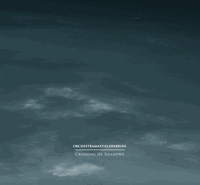
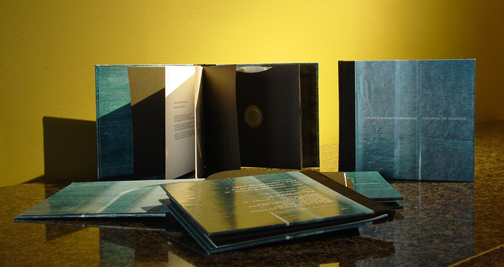
| orchestramaxfieldparrish - | Crossing Of Shadows (fs12)


| | REVIEWS (The Silent Breath Of Emptiness):


| | |